
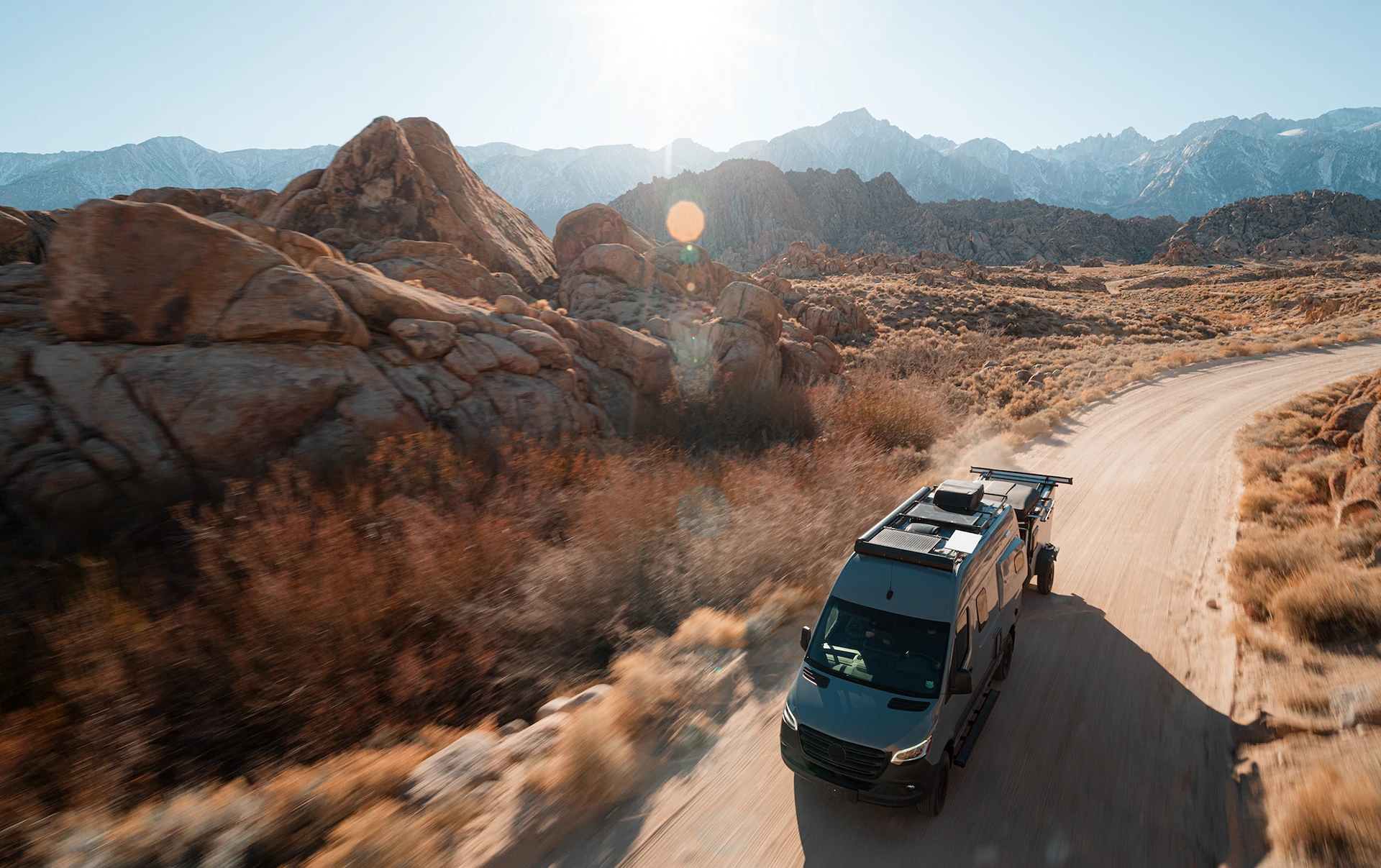
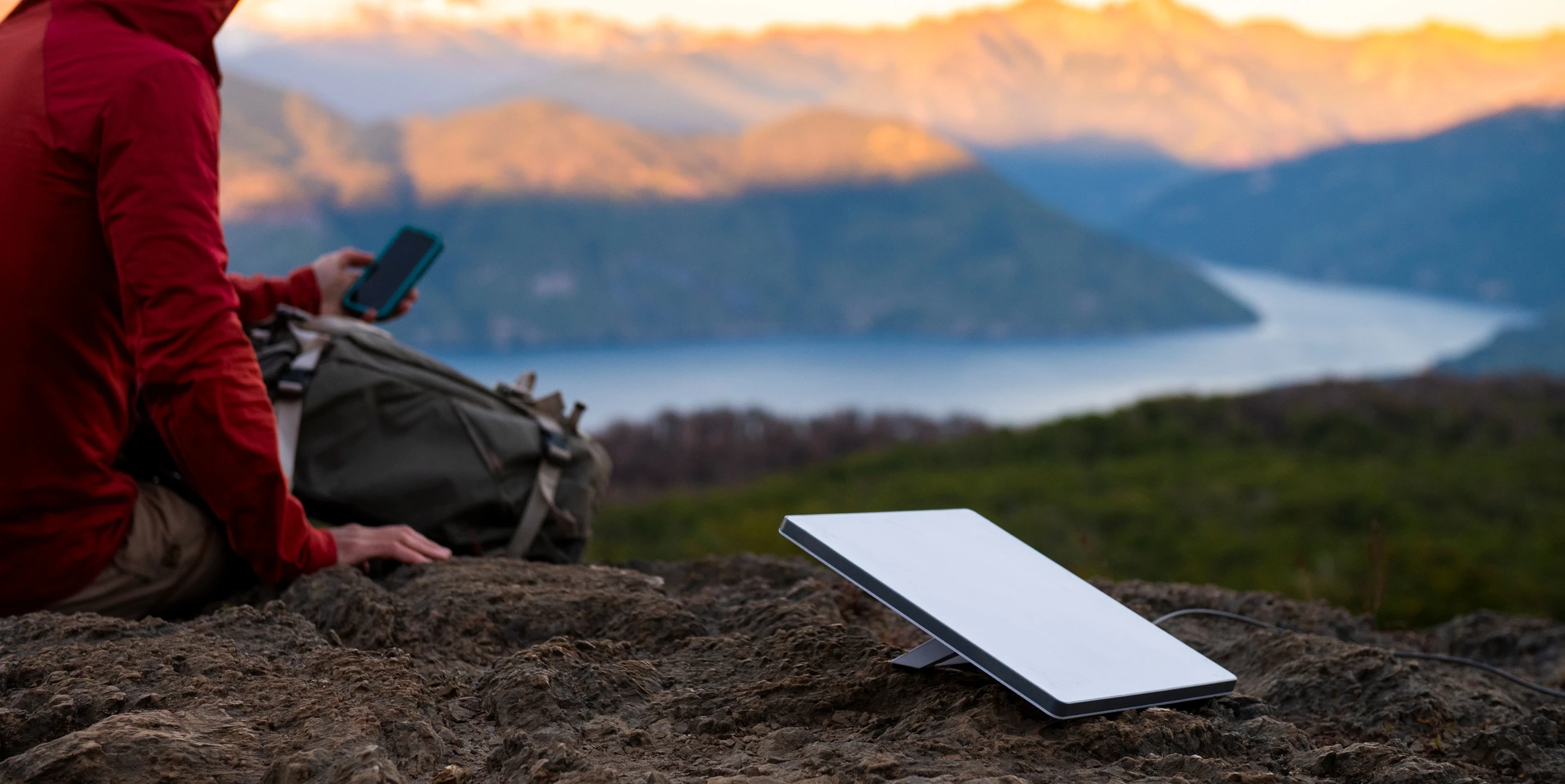
No coverageWhere the mobile network does not reach, or does not always.
Messages where the network does not reach
Over a LoRa radio mesh at 868 MHz. No carrier, no mobile coverage and no servers in between.
Radio868MHz, no carrier

No carrierThere is nothing to sign up for: the 868 MHz band is free.
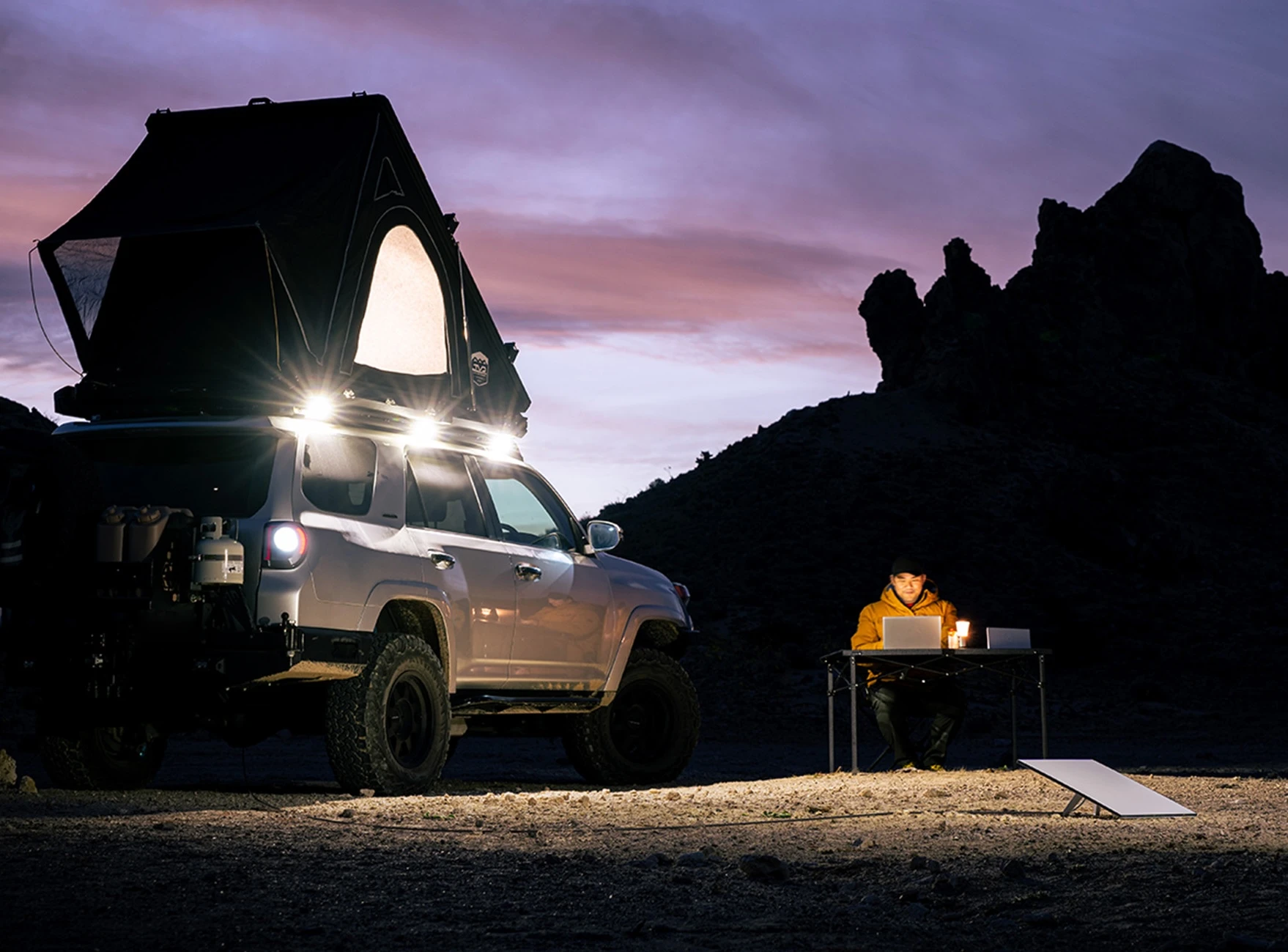
No serversThe message passes through nobody. There is no backend to read.
No subscriptionIt has no economy of its own: no token and no direct revenue.
Text and location messaging where there is no coverage, over LoRa radio and with no operator.
A message with no network
The phone talks over Bluetooth to a radio node, and the nodes talk to each other. No carrier, no mobile coverage and no server in between.
Everyday messaging
PompoOS is everyday messaging for where the internet does not reach. It runs over a mesh of LoRa radio nodes at 868 MHz: no operator, no mobile coverage and no servers in between.
Not an emergency system
It is not an emergency system, and that is worth saying plainly because it is the usual confusion. The market is the hundreds of millions of people without affordable mobile data, not rescue teams. That is why it has the same habits and the same interface as the messaging app people already use.
The path has already been walked
The full path from the application to the radio node exists and has been walked. What is missing is hardware: two boards to close the field test between two points.
From the Greek πομπός, pompós: «the sender, the one who carries». The one who carries the message when there is nobody else to carry it.
How to start
Three pieces: the app, a radio node and another node at the far end. The first one is already published.
Step 1
Install the app
The same messaging interface you already use, built in Flutter with a Rust core that assembles the frames.
Step 2
Pair a node
A Heltec WiFi LoRa 32 V3 board over Bluetooth. The app sees it as the device that will transmit on radio.
Step 3
Talk to the mesh
The message goes out in Meshtastic packets at 868 MHz and hops from node to node until it reaches the recipient.
Where the internet does not reach
It is not an emergency system, and that is worth saying plainly because it is the usual confusion. The market is the hundreds of millions of people without affordable mobile data, not rescue teams.
The pieces it runs on
OmiloOSKryptoOSMeshtasticHeltec WiFi LoRa 32 V3LoRa 868 MHzBluetooth LE
What exists today
Path
From the application to the Meshtastic node, complete
Radio
LoRa 868 MHz, no operator and no servers
Store
Published on Google Play; version 0.1.1 in internal testing
No token
It has no economy of its own
App Store
Build 0.1.1 uploaded to App Store Connect on 7 October 2026, not submitted for review
What it does not do yet
Without this the page would lie by omission, so it goes on the page itself and not in a footnote.
Two Heltec WiFi LoRa 32 V3 boards are missing to close the field test between two nodes.
It is not an emergency system and does not replace one.
pompoos.com is bought and does not respond yet.
Pair your node
The identifier is printed on the board's label, and the app shows it on connecting. It is the name your node goes by on the mesh.
!7c5bd3a4this is how it looks
Pairing happens in the app, over Bluetooth. This page only shows where the identifier is: it activates nothing.
Against what you already use
Three comparisons, and in each one what the other does better is said first.
Everyone has it and the interface is polished.
Its weak pointIt needs the internet, and Meta reads the metadata.
Our wedgeThe same experience with no internet, over Meshtastic, with no carrier and no server.
Meshtastic, the official app
Does betterA community and hardware that already exist.
Its weak pointIt is built for radio amateurs, not for daily use.
Our wedgeA normal messaging interface, for normal people, on top of the same protocol.
Bridgefy
Does betterOffline messaging over Bluetooth, already known.
Its weak pointRange in metres, and a history of security failures.
Our wedgeKilometres of range with LoRa. Ours is unverified in the field: the boards are missing.
The code, measured
Counted against the repository on 17 September 2026. GPL licence, and no continuous integration.
| Language | Files | Lines | % |
|---|---|---|---|
| Dart | 37 | 8.111 | 67 % |
| Rust | 12 | 3.419 | 28 % |
| The rest | 15 | 586 | 5 % |
Frequently asked questions
Does it work with no coverage and no wifi?
Yes: that is the whole point. The phone does not use the mobile network at all; it talks over Bluetooth to a LoRa radio node and that node transmits at 868 MHz. What you need is another node within range.
Do I have to buy hardware?
Yes. You need a Meshtastic-compatible node, such as the Heltec WiFi LoRa 32 V3. It is third-party hardware; we do not make it.
How is it different from the official Meshtastic app?
Same protocol, different interface. The official one is built for radio amateurs; this one has the habits of the messaging app people already use daily.
And from Bridgefy, which also works offline?
Bridgefy runs over Bluetooth and its range is measured in metres. LoRa is measured in kilometres. Our real range is unverified in the field: the boards are missing.
Does it have a token or a cost?
It has no token of its own and no direct revenue: that is a written decision. It lives with DRACMA and returns value through gas and buyback.
Is it published?
On Google Play, yes, in production. On the App Store the build has been on App Store Connect since 7 October 2026 and has not been submitted for review.